























TMD Treatment in Albuquerque, NM
What Is TMD Treatment?
TMD treatment targets the temporomandibular joints that connect your lower jaw to your skull. When those joints or the muscles around them stop working smoothly, you can end up with jaw pain, clicking sounds, headaches, and trouble opening your mouth wide enough to eat a sandwich. Your dentist evaluates how your bite, muscles, and joints interact to find the source of the problem.
Treatment often starts with Night Guards, custom-fitted oral appliances worn during sleep to reduce clenching and take pressure off the joint. Some patients also benefit from bite adjustments, targeted exercises, or muscle relaxation techniques. At Parkway Dental in Albuquerque, NM, the goal is always the least invasive path that gives you lasting relief.
Benefits of TMD Treatment
TMD treatment targets the source of your jaw pain, not just the symptoms, so you get lasting results instead of temporary fixes.
Eat Again Without Thinking Twice
Chewing shouldn't feel like a chore. Once your jaw joint functions properly again, you can bite into an apple or work through a steak without bracing for a click or a sharp ache. That normal function is what most patients miss the most, and it is usually one of the first things to return as treatment progresses.
Fewer Painful Morning Headaches
Many patients with TMD wake up with dull headaches or sore temples from nighttime clenching. Treatment often includes Night Guards that cushion the joint while you sleep, reducing that morning tension. Most patients notice fewer headaches and less facial tightness within the first few weeks.
Your Jaw Can Move Freely Again
A healthy jaw opens about 40 millimeters wide. TMD treatment works to restore that full range of motion so yawning, laughing, and talking feel normal instead of stiff or limited. When your jaw moves freely, everyday actions that used to trigger discomfort simply stop being a concern.
When to Consider TMD Treatment
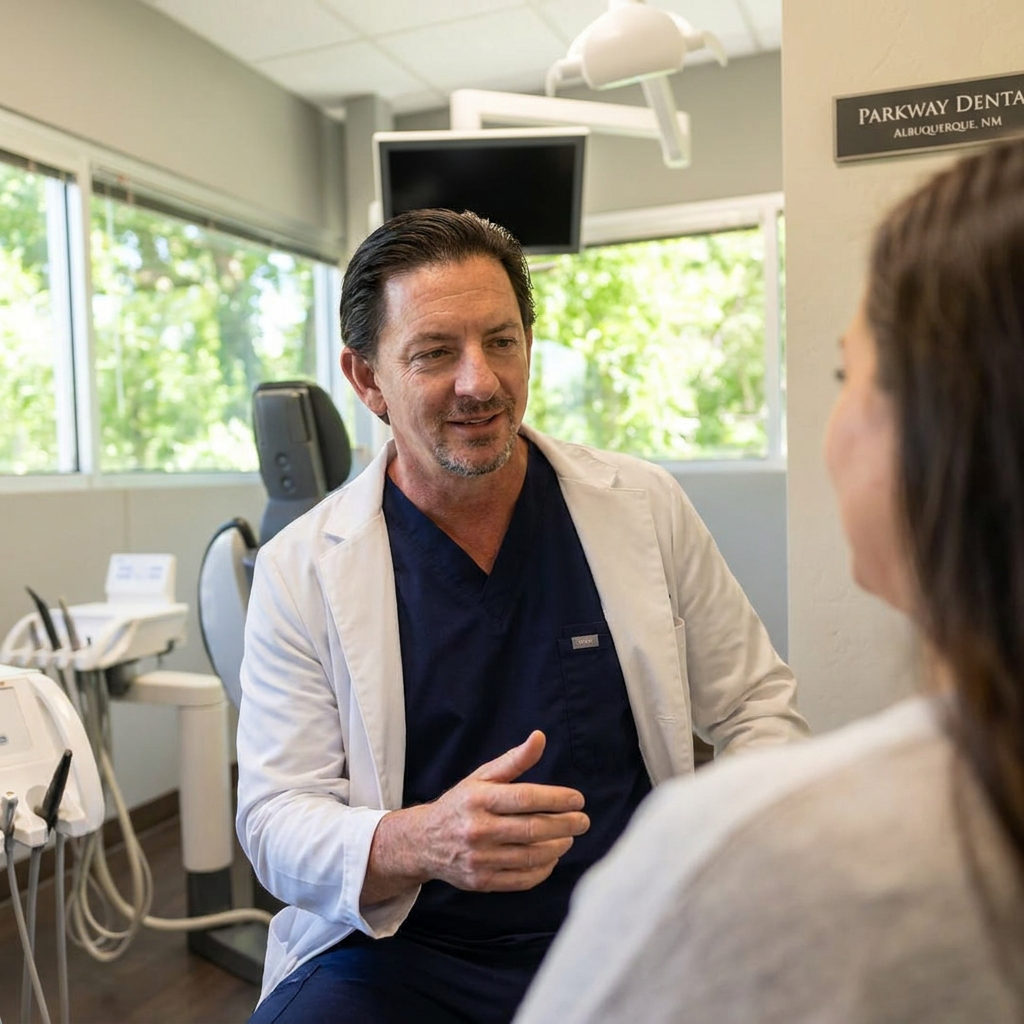
If you wake up with a sore jaw most mornings, or you notice a clicking sound every time you chew, those are signs your temporomandibular joint is under stress. Frequent headaches that start near your temples, ear pain with no infection, and teeth that feel tender without any visible decay all point toward TMD. The symptoms often build gradually, so many people assume the discomfort is normal.
TMD treatment helps adults and teens alike, and the condition does not discriminate by age. Grinding or clenching at night is one of the most common triggers, and Night Guards are often part of the solution. Stress, past jaw injuries, and bite misalignment can all play a role too. Your dentist at Parkway Dental can pinpoint the source during Exams & X-rays and build a plan that fits your specific situation.
Advanced TMD Treatment Technology
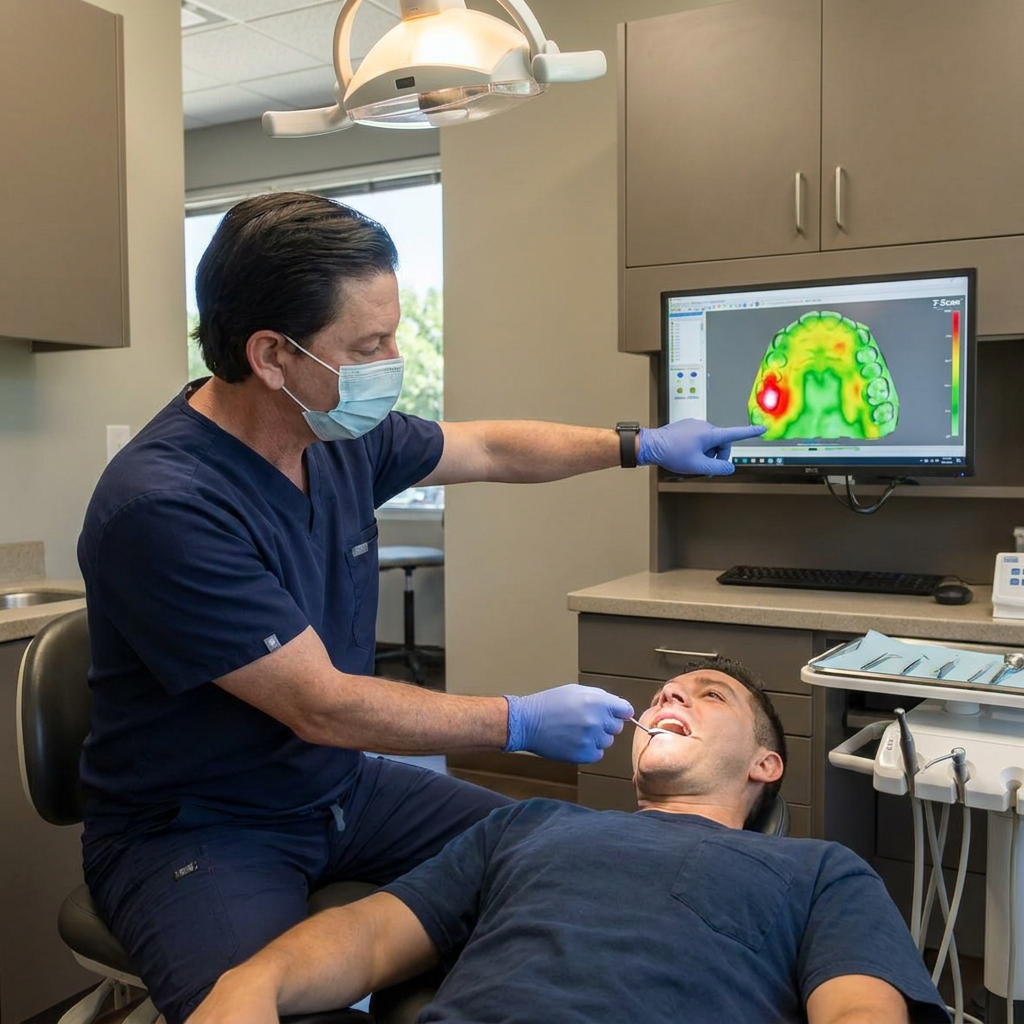
Pinpointing TMD used to rely heavily on a dentist pressing around the joint and listening for clicks. Today, digital imaging and 3D cone beam scans show the joint's bone structure, disc position, and surrounding anatomy in sharp detail. That level of clarity helps your dentist tell the difference between a displaced disc, arthritis, and a muscle-driven problem before any treatment begins.
Digital bite analysis adds another layer. Thin sensors placed between your teeth record exactly where and how hard your bite hits, down to fractions of a second. The data shows imbalances you would never notice on your own. The team at Parkway Dental uses these findings to design appliances and adjustments that fit your specific bite pattern rather than relying on a one-size approach.
What to Expect During Your Visit
Your first TMD treatment appointment at Parkway Dental starts with a thorough exam of your jaw joints, bite alignment, and muscle tension. The dentist may take digital X-rays or ask you to open and close slowly while feeling the joint movement. None of this is painful. Most initial visits run about 45 minutes to an hour.
If Night Guards are part of your treatment plan, you'll have impressions taken so the appliance fits precisely. Many patients notice less jaw tension within the first few weeks of wearing it. Follow-up visits are typically spaced four to six weeks apart so your dentist can check progress and adjust your plan as your symptoms improve.
Before Your Appointment
- Write down when your jaw pain is worst, like morning vs. evening, and whether clenching or chewing triggers it most.
- Skip chewing gum for at least 24 hours before your visit so your jaw muscles are as relaxed as possible during the exam.
- Bring any Night Guards or oral appliances you currently use so your dentist can check their fit and wear patterns.
After Your Appointment
- Wear your custom Night Guards every night as directed, even if jaw pain starts to improve after the first week or two.
- Apply a warm, damp cloth to the side of your jaw for 15 minutes a few times a day to ease muscle tension around the joint.
- Skip chewy foods like bagels, jerky, and gum for at least two weeks so your jaw muscles can rest and start to recover.
Why Our Patients {{p}}Love Us{{/p}}
Frequently Asked Questions
How long does TMD treatment take to relieve jaw pain?
Most patients notice improvement within two to four weeks of consistent treatment. Complex cases involving bite alignment or structural issues may take a few months to fully resolve, with periodic adjustments along the way.
Can TMD treatment help with chronic headaches and ear pain?
Yes. Jaw joint dysfunction often refers pain to the temples, ears, and neck. Once the source of tension in the joint and surrounding muscles is addressed, those secondary symptoms typically fade.
Is TMD treatment safe during pregnancy?
Most non-invasive approaches like oral appliances and jaw exercises are safe throughout pregnancy. Your dentist will review your full health history and coordinate with your OB-GYN before recommending any specific plan.
Will I need to wear a Night Guards long-term for TMD?
It depends on the cause. If clenching or grinding drives your symptoms, wearing Night Guards during sleep is often a long-term habit that protects your jaw joint and teeth from recurring damage.
Can untreated TMD lead to permanent jaw damage?
Over time, chronic TMD can wear down the cartilage disc inside the joint and cause bone changes that are harder to reverse. Early TMD treatment protects the joint before structural damage sets in.
Stay Informed with Expert Insights & Tips About TMD Treatment

No Blog Posts Yet
We’re working on new articles to help you care for your smile. Check back soon for updates from Parkway Dental.
Let's Get You On The Schedule.
Request your appointment using the form below, or give our office a call to set up your visit.
Book Your Appointment Today
We welcome new patients and families to our Albuquerque practice. Call us or schedule online today.
Friday 8:00 AM – 12:00 PM (By Appointment Only)
Saturday - Sunday Closed

Thank you for booking your appointment!
We’ve received your request and will contact you soon to confirm the details. We look forward to seeing you at Parkway Dental!