












Sleep Apnea Treatment in Albuquerque, NM
What Is Sleep Apnea Treatment?
Waking up exhausted after a full night in bed is more than frustrating. It can affect your focus, your mood, and your long-term health. Sleep apnea treatment addresses the root cause: soft tissue in your airway collapses during sleep, briefly cutting off breathing dozens of times per hour. Your dentist can fit you with a custom oral appliance that holds your lower jaw slightly forward, keeping the airway open all night.
The appliance looks similar to a sports mouthguard but is far more precise. It's molded from digital scans of your teeth so it fits snugly without pinching or slipping. Many patients at Parkway Dental in Albuquerque, NM notice deeper sleep within the first week. Because jaw position and airway health are closely connected, your dentist may also evaluate you for TMD Treatment during the same visit.
Benefits of Sleep Apnea Treatment
Sleep apnea treatment does more than quiet your snoring. It changes how you feel during every waking hour.
Wake Up Actually Feeling Rested
When your airway stays open through the night, your body gets the deep sleep it needs. Most patients notice more energy and sharper focus within the first few weeks of consistent use. Better sleep quality also tends to improve mood, reaction time, and how well you manage stress throughout the day.
A Small Oral Appliance, Not a Machine
Custom oral appliances fit like a thin mouthguard and gently hold your lower jaw forward while you sleep. No mask, no hose, no noise on your nightstand. Easy to pack for travel, too. Patients who struggled with CPAP compliance often find an oral appliance much easier to use every night.
Lower Strain on Your Heart and Body
Untreated sleep apnea forces your heart to work harder every night. Treating it reduces that repeated stress and can improve blood pressure, mood, and daytime alertness over time. Those health benefits go well beyond just feeling less tired in the morning.
Could Sleep Apnea Treatment Help You?

If your partner has started sleeping in another room because of your snoring, or you wake up most mornings with a headache and a dry mouth, those are signs worth paying attention to. Sleep apnea treatment is most often needed by adults who stop breathing repeatedly during sleep, sometimes dozens of times per hour. The condition is more common in people over 40, but it affects younger adults too, especially those with a narrow airway or a recessed jaw.
Chronic fatigue that no amount of coffee fixes, difficulty concentrating at work, and irritability that seems to come out of nowhere can all trace back to disrupted sleep. Some patients also experience jaw tension or teeth grinding at night, which may overlap with TMD Treatment. Your dentist at Parkway Dental can screen for airway issues during routine Exams & X-rays and recommend the right next step based on what they find.
Advanced Sleep Apnea Treatment Technology
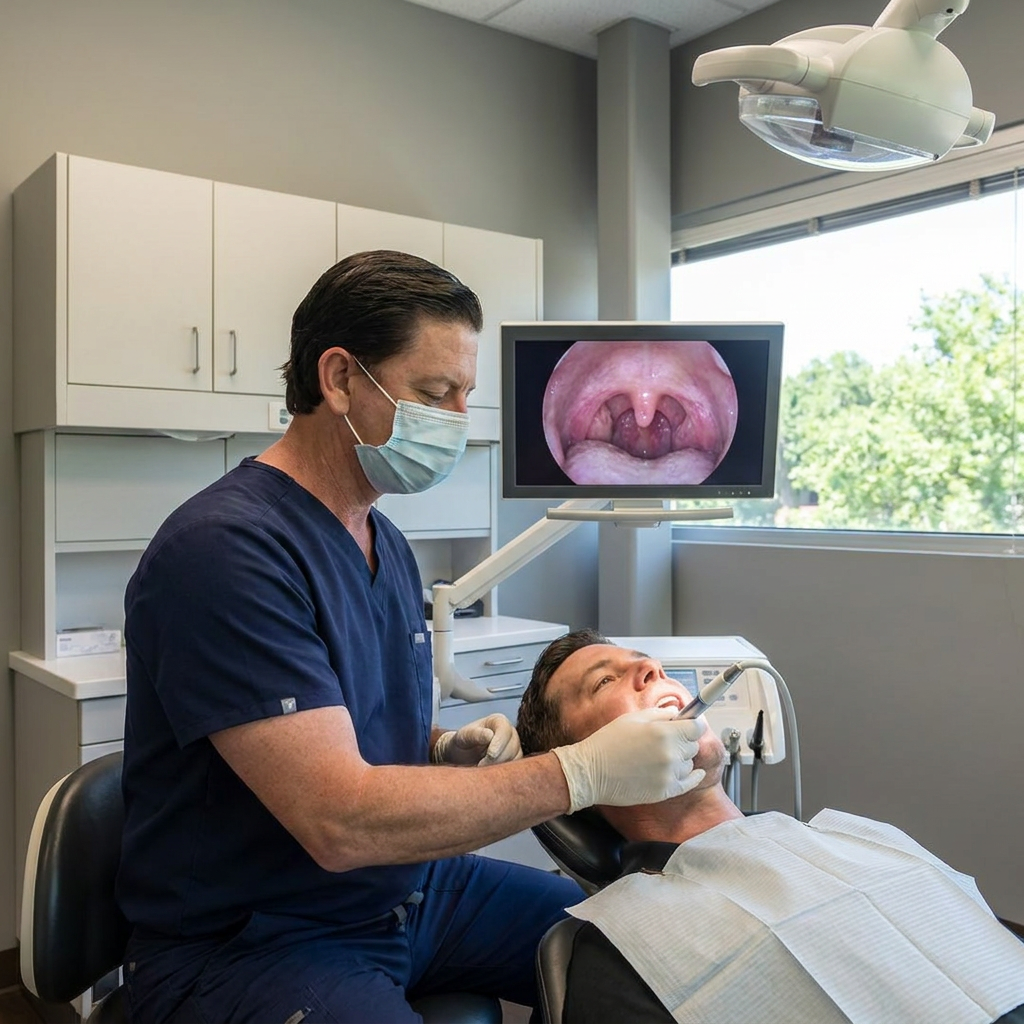
Older oral appliances relied on bulky acrylic trays and rough adjustments. Today's devices use medical-grade nylon and titanium connectors that allow millimeter-level calibration. Your dentist can fine-tune how far the jaw advances, dialing in the exact position that opens your airway without straining the joint. Most current appliances weigh under an ounce and fit in a pocket-sized case.
Digital impressions play a big role in accuracy. A handheld scanner captures your bite in about three minutes, producing a 3D model precise to roughly 50 microns. That data goes directly to the lab, so the finished appliance seats correctly on the first try. Parkway Dental also uses pulse oximetry readings to track your blood oxygen levels before and after treatment, giving you clear numbers that show how your breathing has improved.
What to Expect During Your Visit
Sleep apnea treatment at Parkway Dental starts with a thorough evaluation. Your dentist reviews your symptoms, examines your airway, and may coordinate with a sleep physician for a formal diagnosis. If an oral appliance is right for you, digital impressions of your teeth take just a few minutes, with zero discomfort. The custom device is typically ready within two to three weeks.
At your fitting appointment, your dentist adjusts the appliance so it holds your lower jaw slightly forward, keeping your airway open while you sleep. Most patients adapt within a few nights. A follow-up visit about four weeks later lets the team fine-tune the fit based on how you are sleeping and feeling each morning.
Before Your Appointment
- Bring a list of any current medications, including over-the-counter sleep aids, so your dentist can review interactions with oral appliance therapy.
- Write down your typical sleep patterns, snoring frequency, and any episodes where a partner noticed you stopped breathing overnight.
- Skip caffeine for at least four hours before your appointment so your jaw muscles are relaxed during the bite impressions for your custom device.
After Your Appointment
- Wear your oral appliance every single night, even when traveling. Skipping one night can restart snoring and daytime fatigue.
- Clean your appliance each morning with a soft toothbrush and cool water. Hot water can warp the fit and reduce its effectiveness.
- Keep your follow-up visit so your dentist can check the fit and adjust the bite position if your jaw feels sore or stiff.
Why Our Patients {{p}}Love Us{{/p}}
Frequently Asked Questions
How long does a sleep apnea treatment appliance typically last?
Most oral appliances last three to five years with regular use. Your dentist will check the fit at routine visits and can adjust or replace it before it loses effectiveness.
Can sleep apnea treatment with an oral appliance help if I can't tolerate a CPAP?
Yes. A custom oral appliance is one of the most common alternatives for people who struggle with CPAP. It holds your lower jaw slightly forward to keep the airway open, with nothing strapped to your face.
Will an oral appliance for sleep apnea treatment affect my bite over time?
Minor bite changes can happen with long-term use. Your dentist monitors your bite at follow-up visits and can make small adjustments to the appliance to keep everything aligned properly.
Is sleep apnea treatment safe for people with TMJ problems?
It depends on the severity. Some patients with mild jaw tension do well with an oral appliance, while others may need TMD Treatment first. Your dentist will evaluate your jaw joints before recommending a device.
How often do I need follow-up visits after starting sleep apnea treatment?
Most patients return after two to four weeks for an initial adjustment, then every six months. These visits let your dentist fine-tune the appliance and confirm your symptoms are actually improving.
Let's Get You On The Schedule.
Request your appointment using the form below, or give our office a call to set up your visit.
Book Your Appointment Today
We welcome new patients and families to our Albuquerque practice. Call us or schedule online today.
Friday 8:00 AM – 12:00 PM (By Appointment Only)
Saturday - Sunday Closed

Thank you for booking your appointment!
We’ve received your request and will contact you soon to confirm the details. We look forward to seeing you at Parkway Dental!