Back to Blogs

How Advanced Crown Technology Works Today

Advanced crown technology has revolutionized dental restorations, offering patients stronger, more precise, and often same-day crowns through innovations like CAD/CAM and digital impressions.

August 6, 2026
2 min read
Linda, a woman in a brown sweater, leans on a wooden kitchen counter and bites into a red apple while looking out a window.
Back to Blogs

How Advanced Crown Technology Works Today

Linda, a woman in a brown sweater, leans on a wooden kitchen counter and bites into a red apple while looking out a window.

Advanced crown technology has revolutionized dental restorations, offering patients stronger, more precise, and often same-day crowns through innovations like CAD/CAM and digital impressions.

August 6, 2026
2 min read

Evolution of Dental Crowns

Dental crowns have long been a cornerstone of restorative dentistry, but the methods for creating them have seen remarkable advancements. Today, cutting-edge technology allows for crowns that are not only stronger and more precise but also often delivered in a single visit. This evolution means a more comfortable and efficient experience for patients.

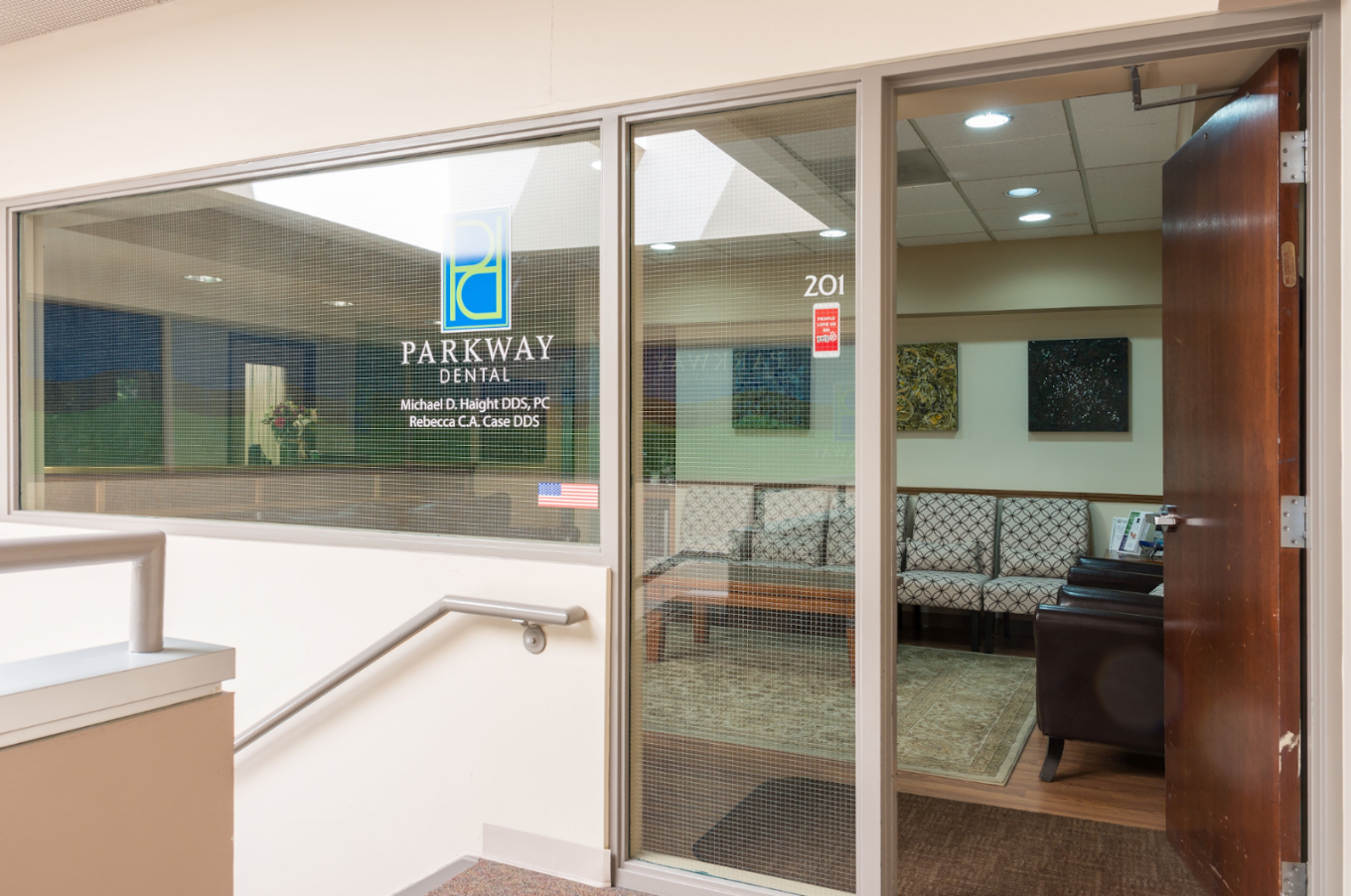
Brittany, a woman in her early 40s, recently visited Parkway Dental after noticing a persistent sensitivity in one of her back molars. She recalled her grandmother’s lengthy crown process years ago. Brittany was curious about modern options.

She wondered if her crown experience would involve multiple appointments. She also asked about temporary crowns. Dr. Michael Haight explained how advanced crown technology could make her treatment simpler.

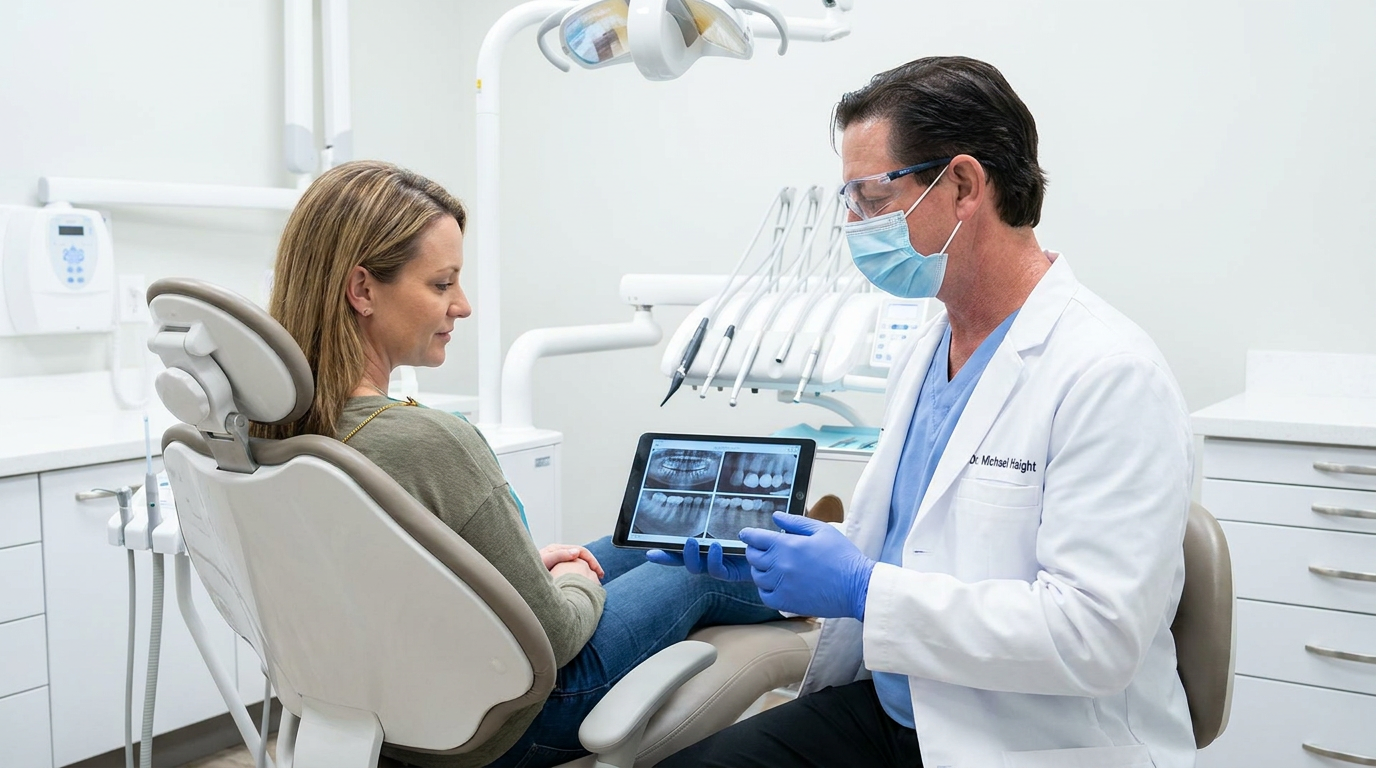
A dentist in a white lab coat, blue scrubs, mask, and safety glasses holds a tablet displaying dental x-rays for a patient in a dental chair.

What Is CAD/CAM Crown Technology?

CAD/CAM technology fundamentally transforms how dental crowns are designed and manufactured, shifting from traditional impressions and lab work to a streamlined digital process. CAD, or computer-aided design, allows Dr. Haight to digitally create the precise dimensions and contours of a crown. CAM, or computer-aided manufacturing, then uses this design to mill the crown from a solid block of material. This process ensures exceptional accuracy and a perfect fit.

Brittany was initially worried about the impression process. She had a strong gag reflex. Dr. Haight assured her that traditional putty impressions were largely a thing of the past.

Instead, a small digital scanner captures images of the tooth. These images create a highly detailed 3D model. This method is much more comfortable for patients like Brittany.

Key Benefits of CAD/CAM

  • Precision: Digital scans are incredibly accurate. They reduce the chance of ill-fitting crowns.
  • Efficiency: The design and milling process is much faster. This often allows for same-day placement.
  • Aesthetics: Computer-aided design ensures the crown blends seamlessly. It matches the natural shape and color of surrounding teeth.
  • Durability: Modern materials used with CAD/CAM are exceptionally strong. They withstand daily chewing forces.
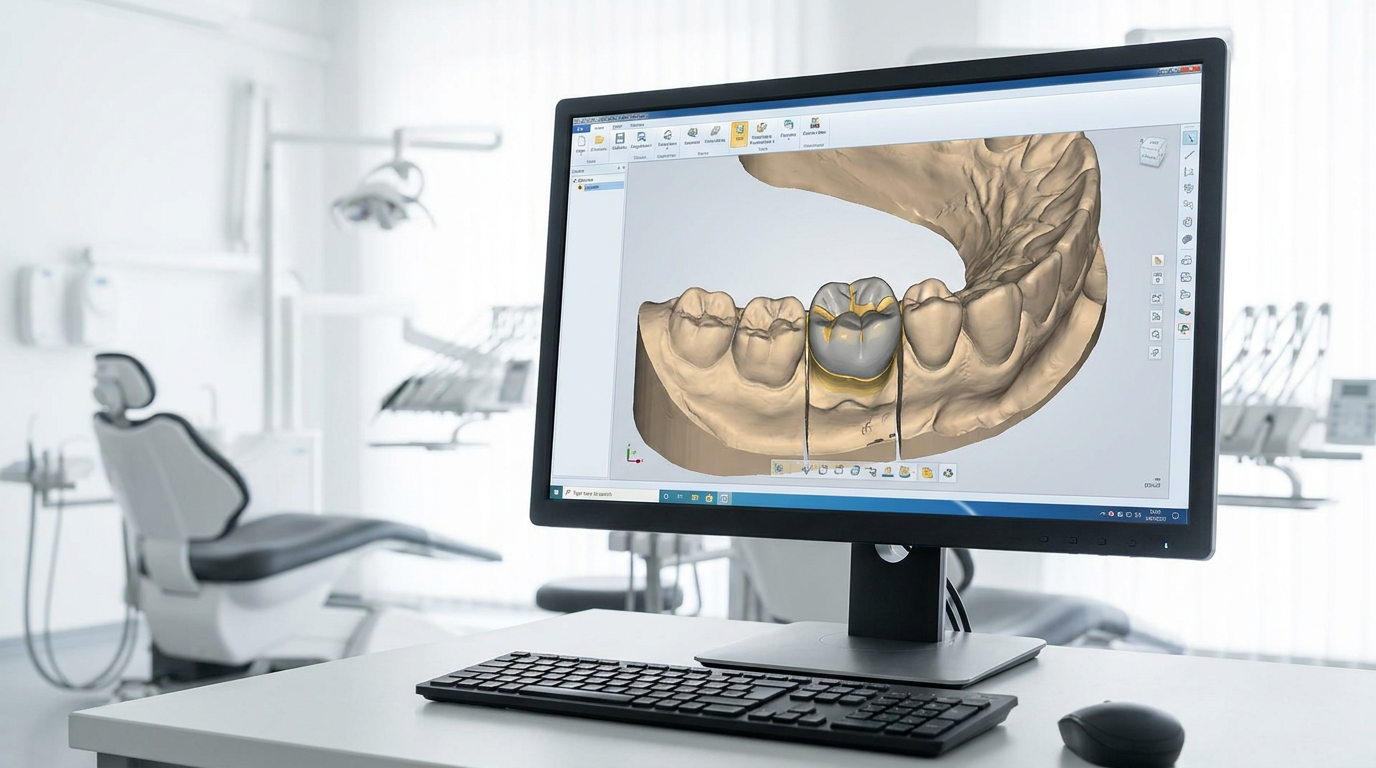
A computer monitor displays a 3D model of a dental arch with a crown, a keyboard, and a mouse on a white desk in a dental office with a blurred dental chair and equipment in the background.

How Digital Impressions Work

Digital impressions replace traditional physical molds with sophisticated imaging technology, capturing every detail of a patient's mouth quickly and comfortably. Dr. Haight uses a small, handheld intraoral scanner that projects a light source onto the teeth and gums. The scanner then captures thousands of data points. This creates a highly accurate 3D digital model.

Brittany watched on a screen as her tooth was scanned. She was amazed by the detail. The process was completely mess-free.

Dr. Haight explained that this digital model could be manipulated. He could view it from any angle. This ensures the crown design is optimally shaped for her bite.

Advantages of Digital Scans

  • Comfort: No more gooey, uncomfortable impression material. This is ideal for patients with sensitive gag reflexes.
  • Speed: The scanning process takes only a few minutes. It is significantly faster than traditional methods.
  • Accuracy: Digital models virtually eliminate human error. They provide more precise data for crown fabrication.
  • Improved Communication: Patients can see their teeth on screen. This helps them understand the treatment plan better.
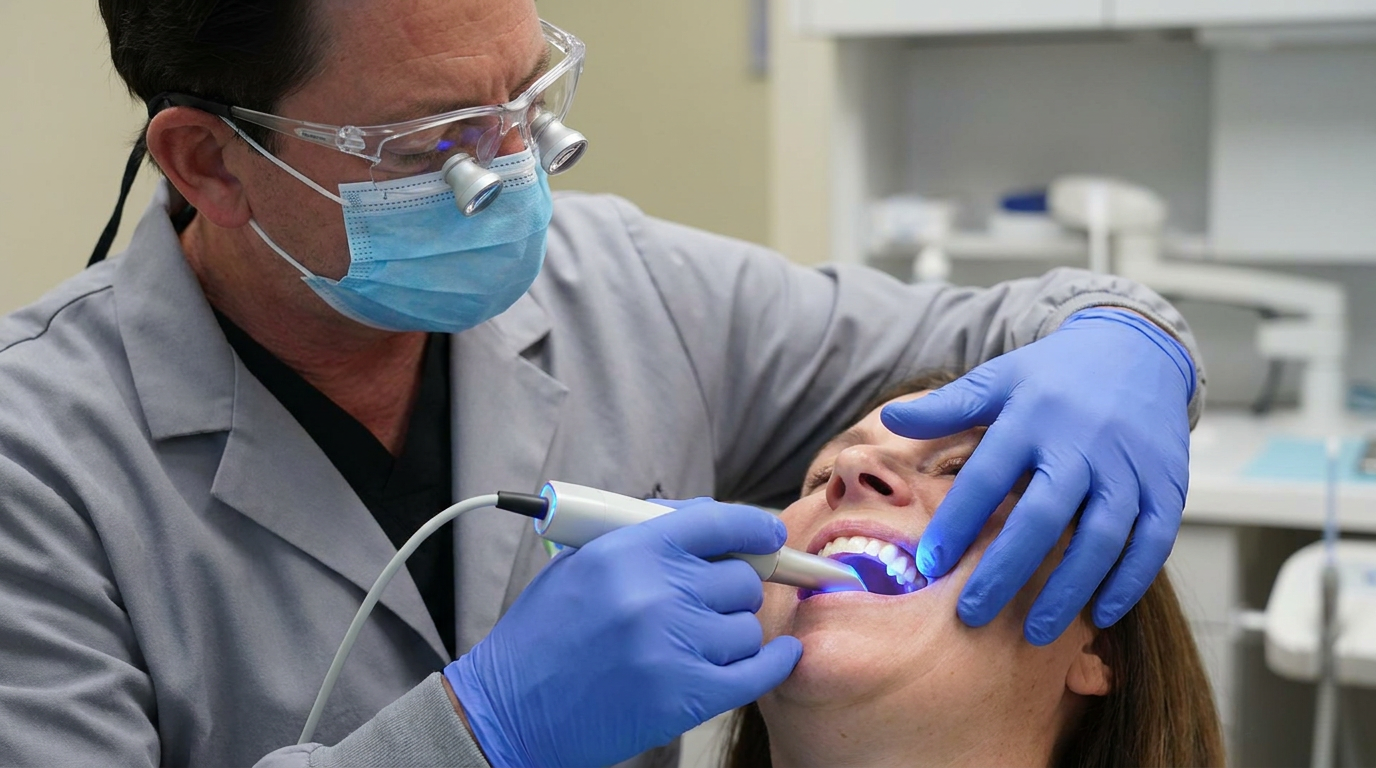
A male dentist in a gray lab coat, black shirt, blue face mask, and safety glasses with loupes uses an intraoral scanner with a blue light on a female patient's open mouth, while wearing blue gloves.

Understanding Cerec® Technology

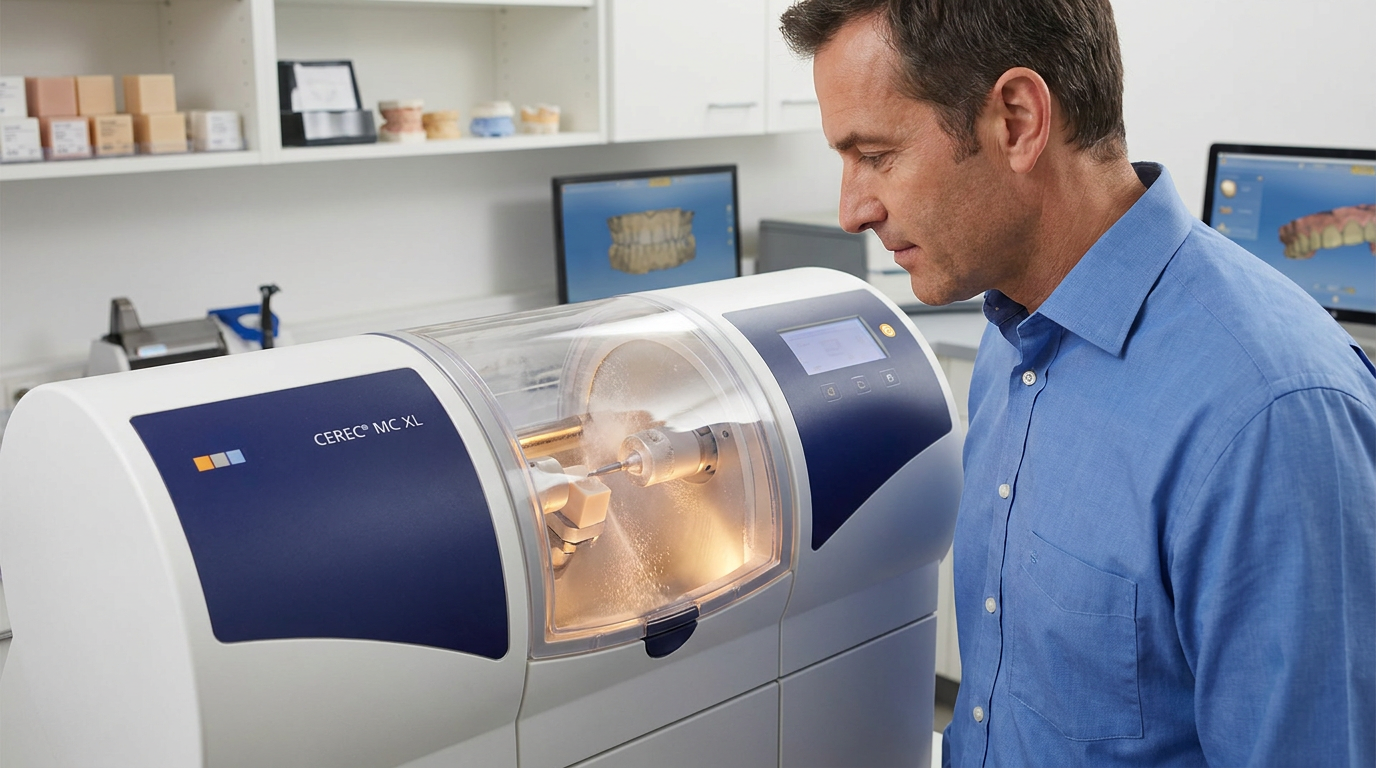
CEREC® Same-Day Crowns utilize advanced crown technology to design, mill, and place a permanent crown in a single dental visit. After the digital impression is taken, the CEREC® software creates a custom crown design. This design is then sent to an in-office milling unit. The milling unit carves the crown from a ceramic block.

Brittany was particularly interested in the convenience of a same-day crown. She has a busy work schedule. Dr. Michael Haight explained how the entire process, from scan to placement, could often be completed in about two hours. This eliminates the need for temporary crowns and a second appointment.

This technology allows Dr. Michael Haight to maintain complete control. He oversees every step of the crown's creation. This ensures a personalized and perfect fit for each patient.

A man in a blue button-up shirt looks at a CEREC MC XL machine as it mills a ceramic block, creating dust inside the illuminated chamber.

Experience Advanced Dental Care

Ready to explore how modern dental technology can enhance your smile? Contact Parkway Dental today to schedule a consultation with Dr. Michael Haight. His team is dedicated to providing comfortable, efficient, and high-quality dental solutions tailored to your unique needs.

Materials for Advanced Crowns

Modern dental crowns created with advanced technology utilize high-quality, durable materials designed for both strength and aesthetic appeal. The choice of material often depends on the specific tooth location and patient needs. Common options include ceramics like zirconia and lithium disilicate. These materials mimic the look and feel of natural teeth.

Brittany wanted her crown to blend seamlessly with her natural smile. Dr. Haight discussed the various material options. He emphasized their lifelike appearance.

He showed her samples of different ceramic shades. This helped her visualize the final result. The goal is always a strong, beautiful, and functional restoration.

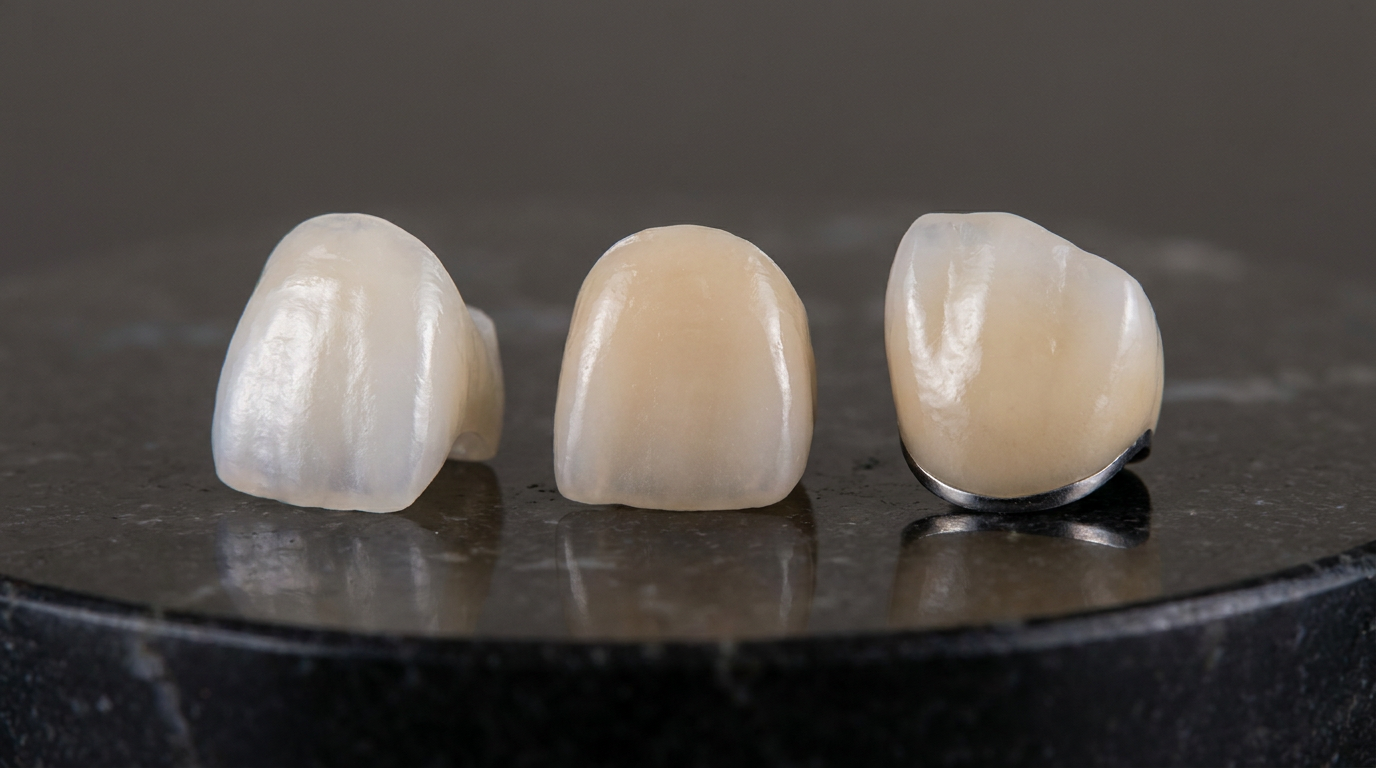
Popular Crown Materials

  • Zirconia: Known for its exceptional strength and durability. Zirconia is ideal for back teeth that endure heavy chewing forces. It is also very biocompatible.
  • Lithium Disilicate: A highly aesthetic ceramic material. It offers excellent translucency, making it a great choice for visible front teeth. It is also remarkably strong.
  • Porcelain Fused to Metal (PFM): Combines the strength of a metal base with a porcelain exterior. PFM crowns offer a balance of durability and aesthetics, though a metal edge can sometimes be visible.
  • E.max®: A brand name for a type of lithium disilicate ceramic. E.max® is favored for its combination of strength, durability, and superior aesthetics.
Three dental crowns are arranged on a dark, polished surface, with the left crown being white, the middle crown being light brown, and the right crown being light brown with a silver base.

Benefits Over Traditional Methods

Advanced crown technology offers significant advantages over traditional crown fabrication methods, primarily in terms of efficiency, precision, and patient comfort. The elimination of goopy impressions and multiple appointments is a major benefit for many. Patients also appreciate the enhanced accuracy of digitally designed crowns. This leads to a better fit and fewer adjustments.

Brittany remembered her grandmother's account of waiting weeks for a crown. She appreciated how technology had shortened this timeframe. Dr. Michael Haight explained how same-day crowns meant less disruption to her busy life.

Moreover, the digital workflow reduces the chance of errors. This can occur when physical models are sent to an external lab. The result is a more reliable and consistently high-quality crown.

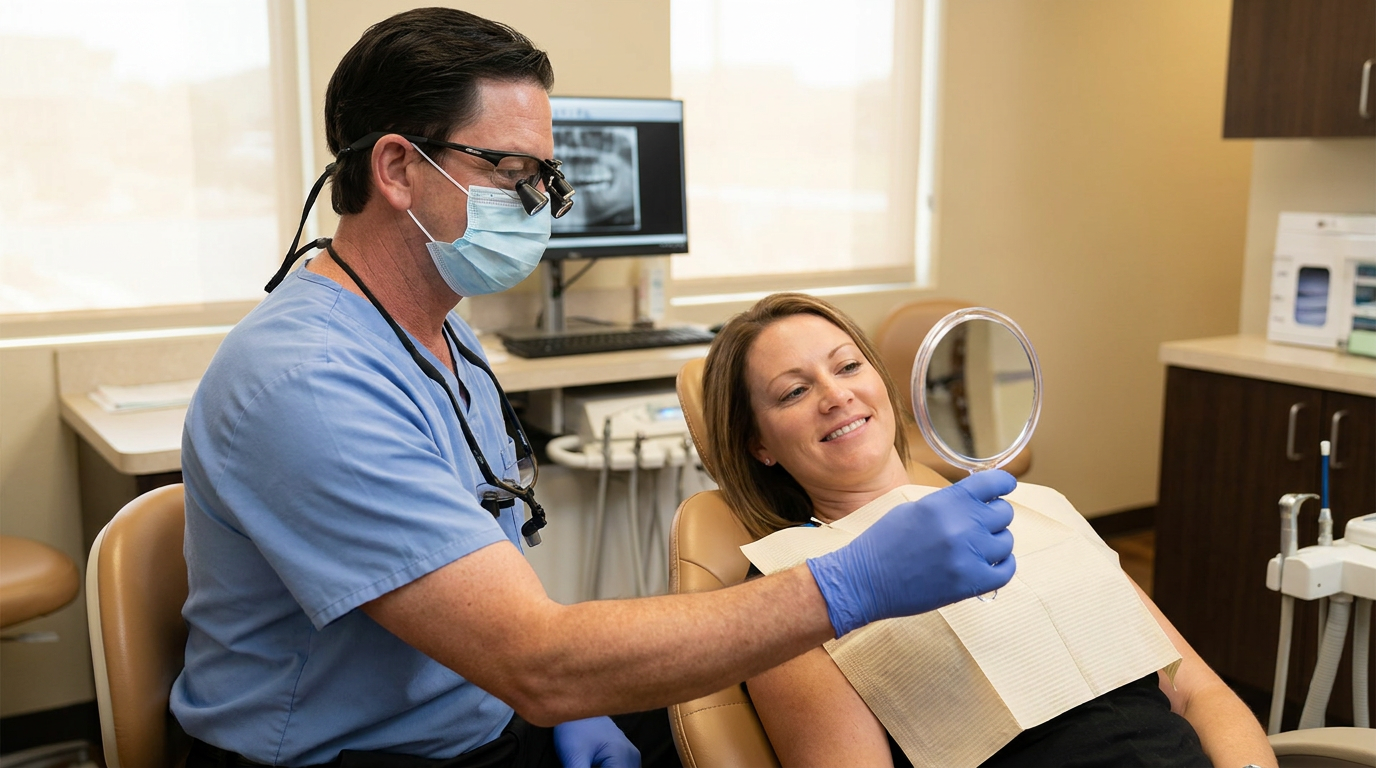
Dr. Michael Haight, wearing a light blue scrub top, blue gloves, a surgical mask, and loupes, holds a mirror for Brittany, who is seated in a dental chair with a bib and smiling.

Are Advanced Crowns Durable?

Yes, advanced dental crowns are designed to be exceptionally durable and long-lasting, often surpassing the longevity of traditional crowns due to improved materials and precision manufacturing. The ceramic materials used, like zirconia and lithium disilicate, are engineered for significant strength. They withstand the rigors of daily chewing and biting. A properly cared-for crown can last many years.

Brittany asked if her new crown would feel as strong as her natural teeth. Dr. Haight confirmed that it would. He stressed the importance of good oral hygiene.

He recommended regular brushing and flossing. Brittany also needed to maintain routine dental cleanings and exams. These practices help ensure the crown's longevity.

Factors Affecting Crown Durability

  • Material Choice: Different materials offer varying levels of strength. Dr. Haight guides patients to the best choice for their needs.
  • Oral Hygiene: Consistent brushing and flossing prevent decay around the crown. It also helps maintain gum health.
  • Bite Forces: Excessive grinding or clenching can stress crowns. Night guards can protect against this.
  • Regular Check-ups: Routine visits allow Dr. Haight to monitor the crown. He can address any issues early on.
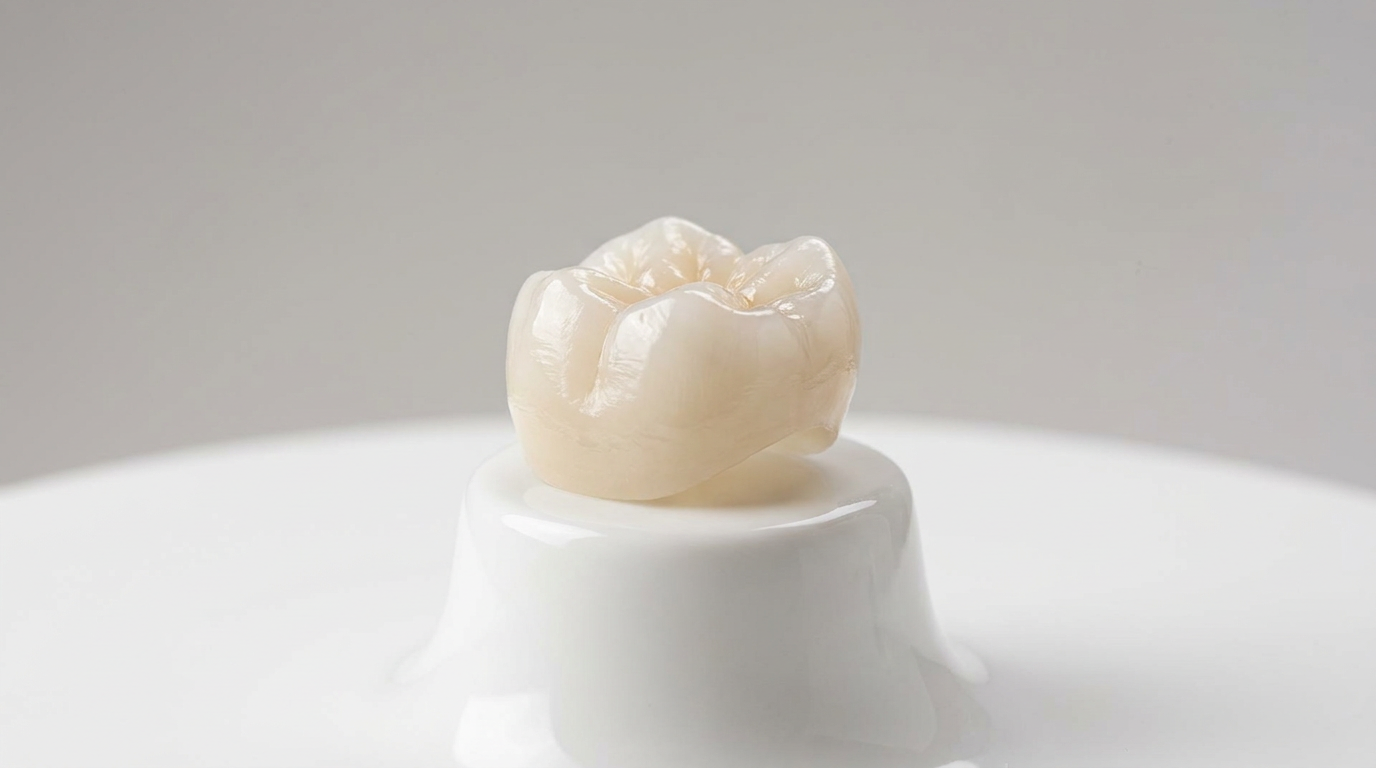
A single, perfectly formed zirconia dental crown rests on a clean white ceramic stand, illuminated by soft, even studio lighting.

Your Modern Crown Experience

The journey from a damaged tooth to a fully restored, healthy smile has been fundamentally transformed by the integration of advanced technology in dentistry. What once involved multiple visits, messy impressions, and temporary solutions has evolved into a far more comfortable, efficient, and precise process. Patients like Brittany no longer need to dread the idea of a crown, knowing that modern techniques deliver superior results with minimal inconvenience.

The precision of digital scanning and the artistry of CAD/CAM design ensure that each crown is not just a restoration, but a seamless extension of their natural dentition, designed to last.

Brittany returned to Parkway Dental for her follow-up, smiling confidently. Her new ceramic crown felt completely natural, and she had forgotten it wasn't her original tooth. She reflected on how different her experience was from what she had anticipated, thanks to the swift and meticulous work done by Dr. Michael Haight and his team.

She felt empowered by understanding the technology involved, from the gentle digital scan to the in-office milling unit that crafted her perfectly fitted crown. Her initial anxieties had given way to gratitude for a process that was not only painless but also remarkably quick. Brittany left the office that day with a renewed appreciation for modern dentistry. She knew she had received the highest standard of care, ensuring her smile would remain healthy and strong for years to come.

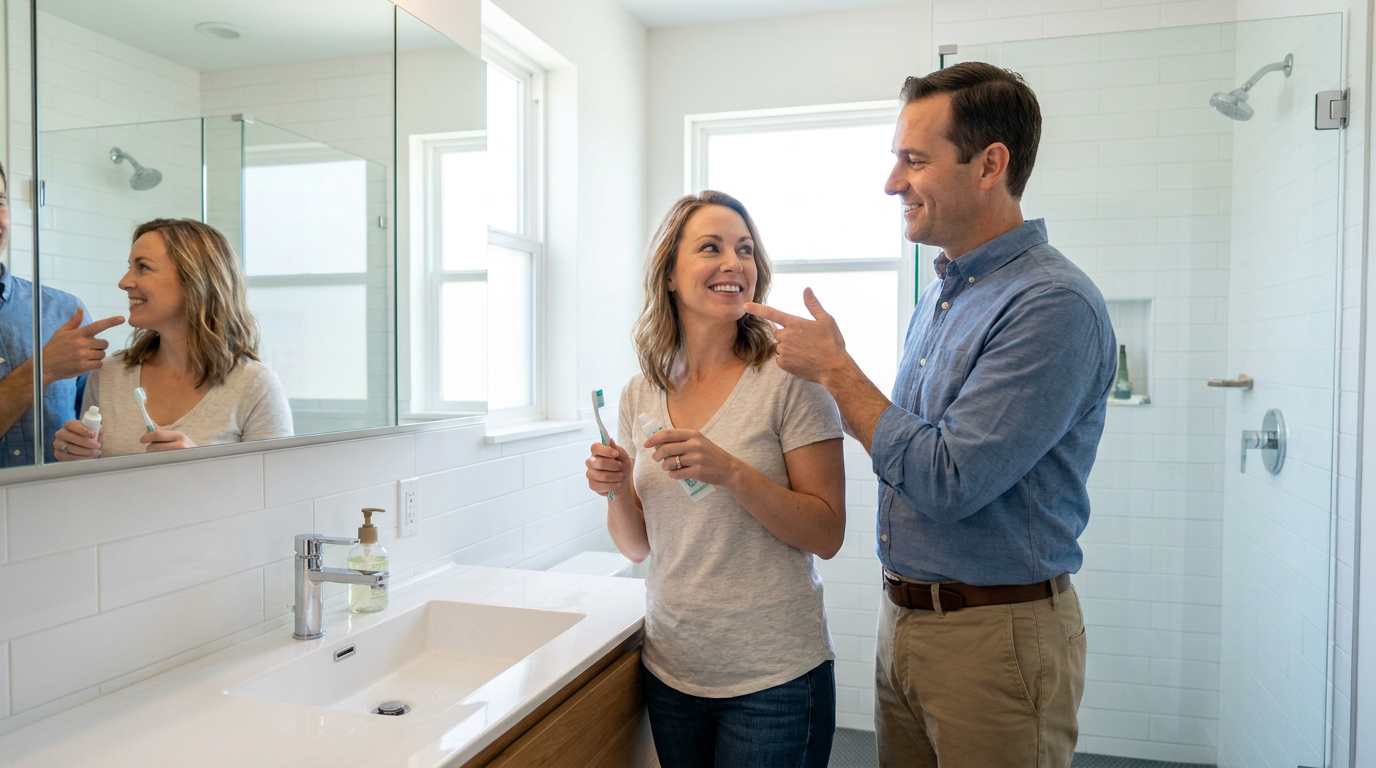
A man in a blue shirt points to the cheek of a woman in a gray shirt, who holds a toothbrush and toothpaste in a modern bathroom.
Categories:
No items found.

Frequently Asked Questions

1. What makes CEREC® different from traditional crowns?
CEREC® technology allows for the design, fabrication, and placement of a dental crown in a single visit using advanced digital scanning and in-office milling. Traditional crowns require multiple appointments and involve sending impressions to an off-site laboratory, which takes several weeks.

2. Are advanced crowns more expensive than traditional crowns?
The cost of crowns can vary based on materials, complexity, and individual needs, but advanced crowns offer the benefit of single-visit convenience, potentially reducing overall treatment time and related expenses. Dr. Michael Haight can provide a detailed estimate during a personalized consultation.

3. How long do digitally designed crowns last?
With proper care and good oral hygiene, digitally designed crowns are exceptionally durable and can last for many years, often a decade or more. Their longevity is comparable to, and in many cases exceeds, traditional crowns, thanks to advanced materials and precise fit.

4. Can any tooth receive an advanced crown?
Most teeth that require a crown can be treated with advanced crown technology. Dr. Michael Haight will assess the specific condition of your tooth and bite to determine if a same-day crown is the best option for your individual case.

5. Is the process for getting an advanced crown uncomfortable?
Patients typically find the advanced crown process to be very comfortable. Digital impressions eliminate the need for messy impression material, and the entire procedure is often completed in one visit, minimizing discomfort and time in the dental chair.

6. How do I care for my new advanced crown?
Caring for an advanced crown is similar to caring for your natural teeth. Regular brushing twice a day, daily flossing, and routine dental check-ups and dental cleanings are essential to maintain its longevity and the health of your surrounding teeth and gums.


BECOME PART OF THE FAMILY

Ready to Experience the Difference?

Join the Albuquerque families who have trusted Parkway Dental with their smiles for over 20 years. From gentle cleanings to advanced restorative and cosmetic care, Dr. Haight and our team are here to help you feel comfortable, cared for, and confident in every visit. Schedule your appointment today and see why our patients keep coming back.
BLOG & RESOURCES

Dental Health Tips & Insights

Stay informed with expert advice from our dental professionals

This is some text inside of a div block.

How Advanced Crown Technology Works Today

Advanced crown technology has revolutionized dental restorations, offering patients stronger, more precise, and often same-day crowns through innovations like CAD/CAM and digital impressions.

August 6, 2026
This is some text inside of a div block.

Dental Implant Costs in 2026

Understanding the cost of dental implants in 2026 involves considering various factors like the number needed, materials, and preparatory procedures to invest in a long-lasting solution.

July 10, 2026
This is some text inside of a div block.

How Same-Day Dental Crowns Save Time

Learn how same-day dental crowns transform your experience, saving time with efficient, comfortable, and lasting restorative dental solutions.

July 10, 2026
GET IN TOUCH

Let's Get You On The Schedule.

Request your appointment using the form below, or give our office a call to set up your visit.

Book Your Appointment Today

We welcome new patients and families to our Albuquerque practice. Call us or schedule online today.

ADDRESS
10409 Montgomery Pkwy NE Ste 201, Albuquerque, NM 87111, USA
Monday to Thursday: 8:00 AM – 12:00 PM, 1:00 PM – 5:00 PM
Friday 8:00 AM – 12:00 PM (By Appointment Only)
Saturday - Sunday Closed

Book An Appointment

Thank you for booking your appointment!

We’ve received your request and will contact you soon to confirm the details. We look forward to seeing you at Parkway Dental!

Oops! Something went wrong while submitting the form.